Do You Have The Proper Fire Extinguisher For The Job?
It’s important to have the appropriate fire extinguisher for the type of fire being fought. Multipurpose fire extinguishers, labeled ABC, may be used on all three classes of fire.
If you use the wrong type of extinguisher, you can endanger yourself and make the fire worse. For example, it is very dangerous to use water or an extinguisher labeled only for Class A fires on a grease fire or electrical fire.
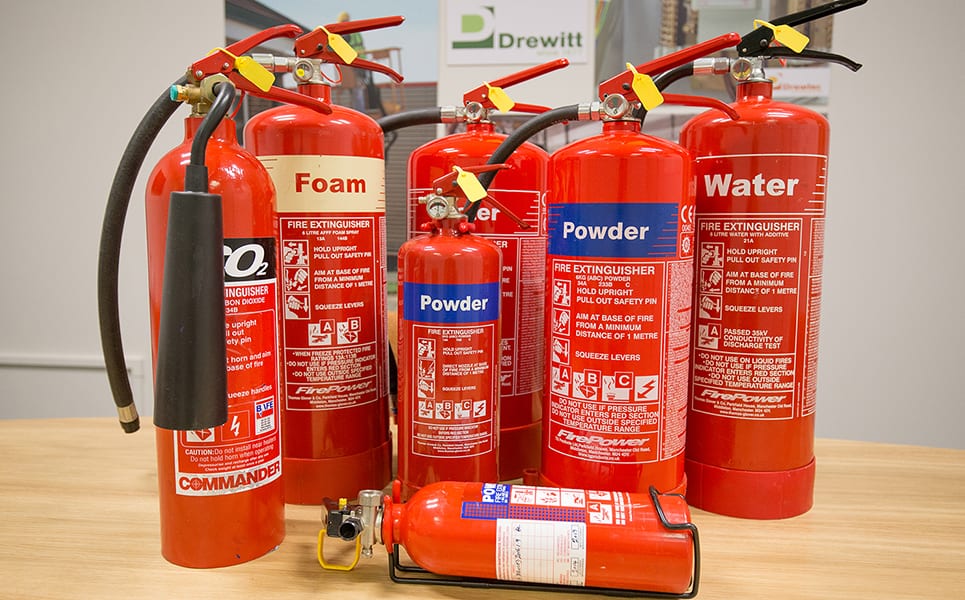
Depending on their intended use, portable extinguishers store specific “extinguishing agents,” which are expelled onto the fire.
The Types of Fire Extinguishers include:
- PRESSURIZED WATER MODELS – are appropriate for use on Class A fires only. These must never be used on electrical or flammable-liquid fires.
- CARBON DIOXIDE – extinguishers contain pressurized liquid carbon dioxide, which turns to a gas when expelled. These models are rated for use on Class B and C fires, but can be used on a Class A fire. Carbon dioxide does not leave a residue.
- DRY CHEMICAL – extinguishers are either stored-pressure models or cartridge-operated models. The stored-pressure models have a lever above the handle for operation. The cartridge-operated models require two steps: Depress the cartridge lever, and then squeeze the nozzle at the end of the hose. The dry chemicals leave a residue that must be cleaned up after use.
- AMMONIUM PHOSPHATE – dry chemical can be used on Class A, B, and C fires, but should never be used on a fire in a commercial grease fryer because of the possibility of reflash and because it will render the fryer’s automatic fire-protection system less effective.
- SODIUM BICARBONATE – dry chemical, suitable for fighting Class B and C fires, is preferred over other dry-chemical extinguishers for fighting grease fires. Where provided, always use the extinguishing system first. This also shuts off the heat to the appliance.
- POTASSIUM BICARBONATE, UREA-BASE POTASSIUM BICARBONATE, and POTASSIUM CHLORIDE – dry chemical are more effective and use less agent than sodium bicarbonate on the same fire.
- FOAM or (AFFF and FFFP) EXTINGUISHERS – coat the surface of a burning flammable liquid with a chemical foam. When using a foam extinguisher, blanket the entire surface of the liquid to exclude the air.
Learn more about fire safety fundamentals
Find valuable life saving answers to frequently asked questions about fire protection and preparedness on our F.A.Q page.
Do you have a business in San Diego or the Banning, Beaumont, Cabazon, Blythe, Cathedral City, Coachella, Desert Hot Springs, Indian Wells, Indio, La Quinta, Mecca, Oasis, Palm Desert, Palm Springs, Rancho Mirage, Thousand Palms, Yucca Valley, or Twentynine Palms areas?
Contact Desert Fire for the best services in fire extinguishers, fire alarms, fire suppression systems, fire sprinkler tenant improvement, inspections, certifications or ground up systems.
✔ Free estimates. Just give us a call or send us a message.
✔ We’ll beat anyone’s prices.
✔ 24/7 Emergency Service. Call us anytime!